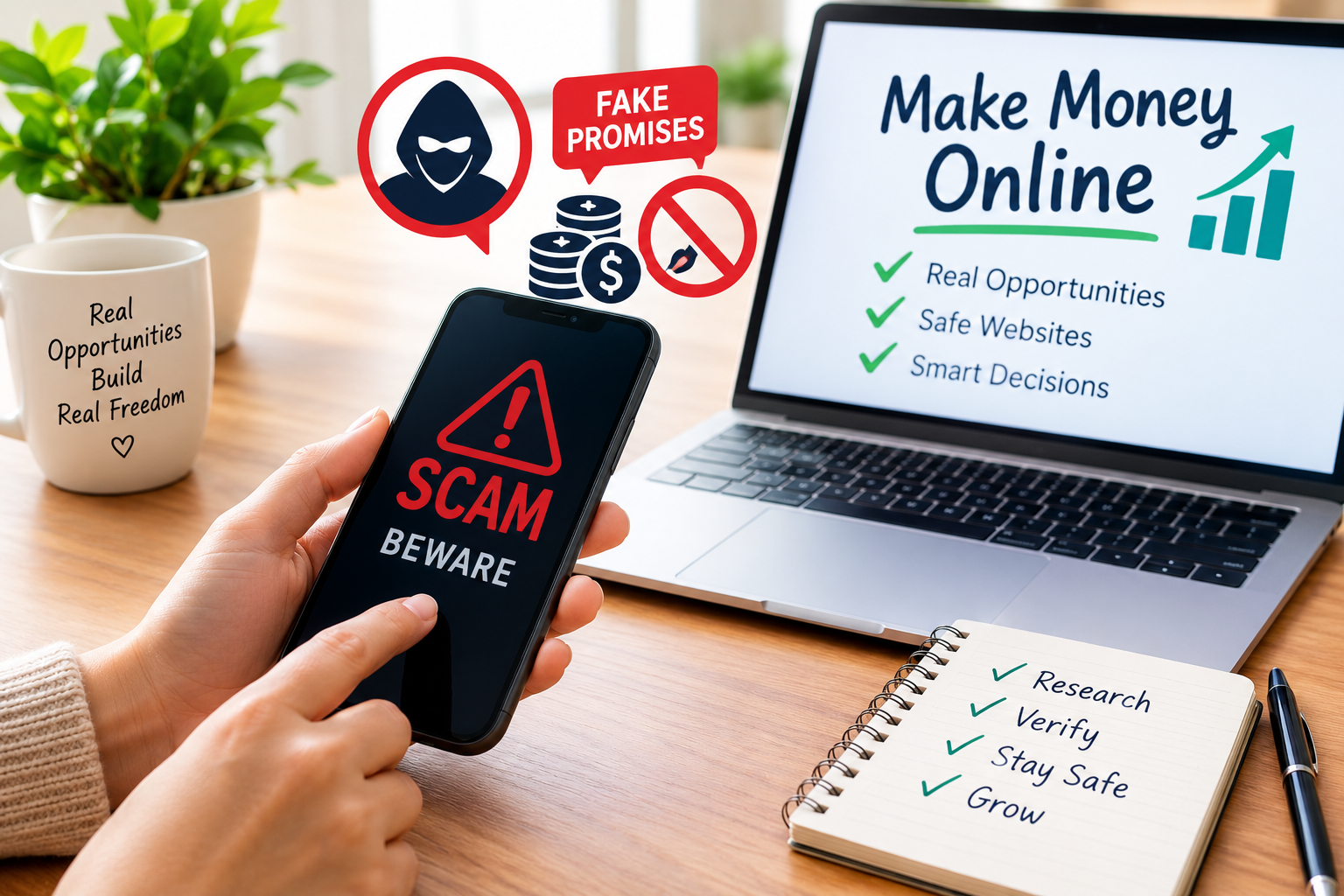
Finding ways to make money online can be a good opportunity for people looking for extra income. However, there are also people who take advantage of this interest to make exaggerated promises or apply scams.
Before buying a course, joining an affiliate program, or providing your personal information, it is important to know how to identify warning signs.
1. Be Careful with Promises of Easy Money
One of the main characteristics of suspicious offers is the promise of making a lot of money quickly, without effort or experience.
Phrases such as “make thousands of dollars in a few days,” “guaranteed income,” or “work a few minutes a day and become rich” should be analyzed carefully.
It is possible to build an income stream online, but it usually requires learning, dedication, promotion, and time.
2. Research Who Is Behind the Opportunity
Before paying for something or providing personal information, find out who is behind the offer.
Search for the person or company and look for:
a) An official website
b) Social media profiles
c) Contact information
d) Company information
e) Reviews and complaints from other customers.
Do not rely only on testimonials published on the sales page itself
3. Be Careful with Pressure to Buy Immediately
Scammers may try to make you make a decision without giving you enough time to think.
Messages such as “last spots available,” “this offer ends in a few minutes,” or “you need to pay now” can be used to create anxiety.
A legitimate offer should give you enough time to read the information, compare alternatives, and make an informed decision.
4. Check the Website Address
Before entering your name, personal information, password, or banking details, carefully check the website address.
Make sure the domain really belongs to the company or service you intend to use.
Also be careful with links received through messages, social media, or unfamiliar emails. An address may look legitimate and still lead to a fake website.
5. Do Not Share Personal Information Without a Clear Reason
Personal information can be misused.
For this reason, avoid sending identification documents, passwords, verification codes, or banking information to people you do not know.
If an online income opportunity asks for personal information, first try to understand why the information is needed and who will be responsible for it.
6. Be Careful with Suspicious Upfront Payments
Not every upfront payment means there is a scam. Legitimate courses, tools, and other services may require payment before you can use them.
The warning sign appears when the payment is combined with exaggerated promises or when there is no clear information about the product, company, or payment terms.
Before paying, check exactly what is being offered and understand the cancellation and refund policies.
7. Testimonials Do Not Guarantee Results
Photos of people showing their earnings, screenshots of accounts, and testimonials can be very convincing.
However, another person’s results do not mean you will achieve the same results.
In affiliate marketing, for example, earnings can vary depending on the product, strategy, audience reached, and each person’s level of dedication.
Therefore, look for concrete information about how the opportunity works rather than relying only on success stories.
8. Read the Terms Before Buying
Before purchasing a course, e-book, tool, or other digital product, read the available information carefully.
Check:
a) What is actually included;
b) The price;
c) Payment methods;
d) Cancellation terms;
e) Refund policy;
f) Who is responsible for the offer.
This simple habit can help you avoid many problems.
9. Use Trusted Platforms and Check the Information
Whenever possible, consider making payments through recognized platforms and verify that the product and seller are actually associated with that platform.
Even so, remember that using a well-known platform does not automatically mean that every offer available through it is right for you. You should still evaluate the product and seller carefully.
10. Stop and Research When Something Seems Too Good to Be True
If an opportunity promises extraordinary results, requires an immediate decision, or seems too good to be true, stop before taking action.
Research, compare information, and, if necessary, talk to someone you trust.
There is nothing wrong with saying, “I will think about it and do some research first.”
Conclusion
Looking for extra income online can be an interesting experience, but it is important to stay realistic.
Do not believe promises of easy money or guaranteed results. Research who is offering the opportunity, read the terms, protect your personal information, and never make a financial decision simply because someone is pressuring you.
The more information you have before making a decision, the less likely you are to fall for a false promise or a scam.
Before investing in online advertising, learn about the differences between organic and paid traffic so you can make more informed decisions.
Please note: This e-book is currently available in Portuguese only. An English edition is not yet available.
Disclaimer: This article is for educational purposes only. It does not guarantee income or specific results. Results depend on each person’s choices, effort, experience, and circumstances.
About the Author
Sidnea Nascimento is the creator of Renda Extra pelo Celular, a website dedicated to sharing practical information and ideas about earning extra income online. Her goal is to help readers discover digital opportunities and make informed decisions.