
Categoria: Affiliate Marketing

  • How to Choose the Right Affiliate Product to Promote: A Beginner’s Guide

    How to Choose the Right Affiliate Product to Promote: A Beginner’s Guide

    Choosing the right product to promote is one of the most important decisions in affiliate marketing. Many beginners focus only on commission rates and end up promoting offers that don’t match their audience, make unrealistic promises, or fail to deliver real value.

    A product with a high commission isn’t necessarily a good choice. Responsible affiliate marketing involves evaluating the product, the seller, the sales page, customer support, and the needs of the people who follow your content.

    When I first started researching products to promote, one of my biggest questions was whether I should simply choose the offer with the highest commission.

    Over time, I realized that commission percentages alone don’t tell the whole story. Now, I pay closer attention to whether a product fits my audience, whether the sales page clearly explains what buyers will receive, and whether the promises sound realistic.

    Taking the time to evaluate these details helps me make more responsible recommendations and protect the trust of my audience.

    In this guide, you’ll learn how to evaluate an affiliate product before getting your affiliate link and starting your promotions.

    What I’ve Learned About Choosing Affiliate Products

    At first, I mainly looked at commission rates and how attractive an offer appeared. Over time, I realized those factors weren’t enough.

    A good affiliate product should be relevant to your audience, provide clear information, and have a sales page that accurately explains what customers will receive.

    Before promoting an offer, I try to review the product description, price, delivery method, customer support options, and affiliate program rules. I also check whether the promises are realistic and whether the sales page works properly on mobile devices.

    These simple precautions help me avoid confusing offers and products that could damage my audience’s trust.

    Another important lesson I’ve learned is that you don’t need to promote dozens of products at once.

    Choosing a few relevant products, researching each one, and creating genuinely helpful content makes it easier to stay organized.

    It also allows you to explain the benefits, limitations, and important considerations without turning your website or social media profile into an endless collection of affiliate links.

    To learn more about platforms where you can find and promote digital products, read our guide: Kiwify, Hotmart, and Cakto: How Do They Work?.

    1. Why Is Choosing the Right Affiliate Product So Important?

    When you recommend a product, you’re also putting your credibility on the line.

    Even Thor affiliates aren’t usually responsible for creating or delivering the product, customers may associate their buying experience with the person who recommended it.

    If a product is disappointing, misleading, or lacks proper customer support, your audience may lose trust in your recommendations.

    On the other hand, honest and relevant recommendations can help you build credibility over time.

    Before choosing a product, ask yourself three important questions:

    a) Does this product solve a real problem?

    b) Is it relevant to the audience I want to reach?

    c) Would I feel comfortable explaining its features, benefits, and limitations honestly?

    If the answer to these questions is no, consider looking for another product.

    2. Define Your Audience Before Choosing Products

    The first step isn’t to join an affiliate platform and pick the product with the highest commission. It’s to understand who you want to create content for.

    Having a clearly defined audience makes it easier to choose relevant products and create effective promotional content.

    Ask yourself:

    A) Who are the people I want to help?

    B) What are their biggest challenges?

    C) What are they searching for online?

    D) Which products could make their everyday lives easier?

    E) What can they realistically afford?

    F) Which social media platforms do they use?

    For example, a social media account focused on home organization might promote household tools, space-saving furniture, or educational resources related to home management.

    On the other hand, an account focused on digital entrepreneurship should prioritize tools, courses, books, and resources related to working online.

    Avoid choosing completely unrelated products just because they offer attractive commissions. Doing so can confuse your audience and make people less interested in your recommendations.

    3. Identify the Problem the Product Solves

    Every product should address a specific need, desire, or challenge.
    Before promoting a product, try to answer these questions:

    A) What is the product designed for?

    B) What problem is it supposed to solve?

    C) Who would genuinely benefit from it?

    D) How is the product used?

    E) What results can customers realistically expect?

    F) What are its limitations?

    The better you understand the problem a product addresses, the easier it becomes to create helpful and relevant content.

    Instead of simply telling people to “buy this product,” explain when it might be useful, what buyers should consider, and who it is best suited for.

    This approach helps your audience make informed decisions rather than feeling pressured to buy.

    4. Evaluate Product Quality

    Whenever possible, try to learn about or test a product before recommending it. If you can’t test it yourself, carefully review the official product information and research the seller’s reputation.

    Pay attention to the following details:

    A) Product description.

    B) Photos or demonstrations.

    C) Customer reviews.

    D) What is included with the purchase.

    E) Warranty or guarantee information.

    F) Customer support options.

    G) Recurring complaints.

    H) The reputation of the seller or product creator.

    For digital products, check whether the sales page clearly explains the content, the format of the lessons or materials, who the product is intended for, and how customers can access it.

    For physical products, review the specifications, dimensions, materials, warranty, shipping details, and customer feedback.

    Never claim that you’ve personally tested or used a product if you haven’t. You can recommend products based on official information and careful research, but you should always be transparent about your experience.

    The sales page is where potential customers will go after clicking your affiliate link. Even if your promotional content is excellent, a confusing or untrustworthy sales page can discourage people from making a purchase.

    Before promoting a product, check whether the sales page includes:

    A) The product name and a clear description.

    B) Benefits explained in a straightforward way.

    C) Pricing and available payment methods.

    D) Information about the seller or company.

    E) Customer support contact information.

    F) Warranty, guarantee, or refund policies.

    G) A secure checkout process.

    H) Important terms, conditions, or disclaimers.

    I) A mobile-friendly design that works properly on smartphones.

    Be cautious of sales pages that use excessive pressure, fake countdown timers, questionable testimonials, or unrealistic promises.

    A trustworthy sales page should provide enough accurate information to help customers make an informed purchasing decision.

    6. Be Careful with Unrealistic Promises

    When promoting products related to making extra income, it’s especially important to avoid offers that guarantee easy money or promise the same results for everyone.

    Be cautious of claims such as:

    A) “Make money without doing anything.”

    B) “Guaranteed results.”

    C) “Get rich in just a few days.”

    D) “A secret method that never fails.”

    E) “Everyone can earn a specific amount of money.”

    F) “Automatic profits with no experience or effort.”

    Financial results vary depending on a person’s knowledge, actions, strategy, market conditions, and individual circumstances.

    Promoting misleading claims can harm buyers, damage your credibility, and even put your affiliate accounts or social media profiles at risk.

    Choose products that communicate realistic expectations and clearly explain what customers will receive.

    7. Check the Commission Details Carefully

    Commission rates matter, but they shouldn’t be the only factor when choosing an affiliate product.

    A high commission percentage doesn’t automatically mean that a product will be easy to sell or that your actual earnings will be high.

    Before promoting an offer, review the following details:

    A) Product price.

    B) Commission percentage or fixed commission amount.

    C) Possible fees or deductions.

    D) When commissions become available for withdrawal.

    E) Refund or money-back guarantee period.

    F) Minimum payout threshold.

    G) Available payment methods.

    H) Refund and commission reversal policies.

    I) Rules for tracking and attributing sales to affiliates.

    Also, check whether the product involves subscriptions or recurring payments and whether affiliates earn commissions on renewals.

    Always confirm these details directly with the affiliate platform, since commission rates, payment terms, and program policies may change.

    8. Review the Affiliate Program Rules

    Every affiliate program has its own rules for promoting products.

    Some programs allow promotion through social media, blogs, and paid advertising. Others restrict certain types of campaigns, keywords, brand names, or promotional activities in online groups.

    Before publishing your content, make sure you understand:

    A) Whether paid advertising is allowed.

    B) Whether you can share your affiliate link directly.

    C) Whether you’re allowed to use images provided by the seller.

    D) Whether certain words or claims are prohibited.

    E) Whether you can promote the product in online groups.

    F) Whether there are restrictions on coupons or discount codes.

    G) Whether affiliates are allowed to purchase through their own links.

    H) Whether there are rules about using the company’s logo, brand name, or visual identity.

    Ignoring these rules could lead to canceled commissions or removal from the affiliate program.

    9: Check Whether There Is Demand for the Product.

    A product should meet a real need or address something people are genuinely interested in.

    You can identify potential demand by looking at:

    A) Questions people ask on social media.

    B) Comments on videos related to the topic.

    C) Suggestions that appear in Google Search.

    D) Customer reviews on online marketplaces.

    E) Popular content in your niche.

    F) Questions and concerns shared by your own audience.

    Just because a product is popular doesn’t mean you should copy what everyone else is doing. Instead, use the questions and concerns you discover to create clearer, more helpful content.

    For example, if people are searching for advice on choosing a microphone for recording videos, you could write an informative article explaining what to look for and suggest suitable options at the end.

    10. Review the Promotional Materials

    Some product creators provide promotional materials to help affiliates, such as:

    A) Images.

    B) Videos.

    C) Written content.

    D) Banners.

    E) Product descriptions.

    F) Technical information.

    G) Sample advertisements.

    These materials can be helpful, but you shouldn’t publish them automatically without reviewing them first.

    Adapt the message to your audience and make sure the information is still accurate and up to date. Avoid copying the exact same text used by hundreds of other affiliates.

    Creating original content helps build trust and makes your recommendations stand out.

    11 — Digital or Physical Products: Which Should You Choose?

    Both types of products have advantages and challenges.

    Digital Products

    Digital products may offer higher commissions and instant delivery. However, it’s important to carefully evaluate the quality of the content, the promises made by the seller, and the customer support available.

    Physical Products

    Physical products can be easier to demonstrate visually and may have consistent demand. However, they often come with lower commission rates, price fluctuations, and challenges related to inventory and shipping.

    The best choice is the product that fits your audience’s needs and the type of content you can realistically create.

    12: How Many Products Should You Promote When Starting Out?

    If you’re just starting out in affiliate marketing, it’s better to focus on a small number of products.

    Choose one to three related products and take the time to learn:

    A) Who needs these products.

    B) What questions potential customers have.

    C) How to explain the benefits clearly.

    D) What concerns or objections your audience may have.

    E) What types of content generate interest.

    Promoting dozens of unrelated products can make it harder to communicate clearly and build trust with your audience.

    As you gain experience and analyze your results, you can gradually expand the number of products you promote.

    Product Evaluation Checklist
    Before promoting a product, ask yourself:

    A) Does this product fit my niche?

    B) Does it meet a real need?

    C) Is the offer clearly explained?

    D) Does the sales page work properly on mobile devices?

    E) Does the seller have a good reputation?

    F) Is customer support available?

    G) Are the product’s promises realistic?

    H) Are the commission rates and payment terms clear?

    I) Have I reviewed the affiliate program rules?

    J) Can I create helpful content about this product?

    K) Would I feel comfortable recommending this offer?

    If you answer no to several of these questions, don’t promote the product just because it offers a high commission.

    13. Common Mistakes When Choosing Affiliate Products

    Avoid these common mistakes:

    A) Choosing products based only on commission rates.

    B) Promoting offers without reading the sales page.

    C) Recommending products that don’t fit your niche.

    D) Ignoring customer reviews and complaints.

    E) Making claims that cannot be verified.

    F) Sharing expired affiliate links or promoting out-of-stock products.

    G) Copying content from other affiliates.

    H) Pretending you’ve personally used a product when you haven’t.

    I) Promoting too many offers at the same time.

    J) Ignoring the affiliate platform’s rules.

    Choosing products carefully helps reduce risks and build a more trustworthy affiliate marketing business.

    Conclusion

    Choosing the right affiliate product involves much more than looking at commission rates. You need to understand your audience, evaluate product quality, review the sales page, and carefully check the affiliate program rules.

    Trust is one of the most valuable assets you can build when creating content and recommending products. A single sale is never worth losing your audience’s confidence.

    Start with a few carefully selected products, create genuinely helpful content, and share honest information. Over time, you’ll gain a better understanding of your audience and learn how to make more informed decisions.

    If you’d like a step-by-step introduction to getting started in the digital world, explore my e-book, “Renda Extra pelo Celular: Guia Prático para Começar do Zero,” by Sidnea Nascimento.

    The guide covers affiliate marketing, choosing products, creating content, organic promotion, common beginner mistakes, and a practical seven-day action plan.

    Please note: This e-book is currently available in Portuguese only. An English edition is not yet available.

    Disclaimer: This content is for educational purposes only. Sales, income, and results are not guaranteed. Individual outcomes depend on factors such as strategy, effort, personal circumstances, and market conditions.

    About the Author

    Sidnea Nascimento is the creator of Renda Extra pelo Celular, a website dedicated to providing clear, practical, and responsible information for people who want to learn about earning extra income and affiliate marketing.

    Learn more about the author

  • How to Identify Scams and False Promises of Making Money Online

    How to Identify Scams and False Promises of Making Money Online

    Finding ways to make money online can be a good opportunity for people looking for extra income. However, there are also people who take advantage of this interest to make exaggerated promises or apply scams.

    Before buying a course, joining an affiliate program, or providing your personal information, it is important to know how to identify warning signs.

    1. Be Careful with Promises of Easy Money

    One of the main characteristics of suspicious offers is the promise of making a lot of money quickly, without effort or experience.

    Phrases such as “make thousands of dollars in a few days,” “guaranteed income,” or “work a few minutes a day and become rich” should be analyzed carefully.

    It is possible to build an income stream online, but it usually requires learning, dedication, promotion, and time.

    2. Research Who Is Behind the Opportunity

    Before paying for something or providing personal information, find out who is behind the offer.

    Search for the person or company and look for:

    a) An official website

    b) Social media profiles

    c) Contact information

    d) Company information

    e) Reviews and complaints from other customers.

    Do not rely only on testimonials published on the sales page itself

    3. Be Careful with Pressure to Buy Immediately

    Scammers may try to make you make a decision without giving you enough time to think.

    Messages such as “last spots available,” “this offer ends in a few minutes,” or “you need to pay now” can be used to create anxiety.

    A legitimate offer should give you enough time to read the information, compare alternatives, and make an informed decision.

    4. Check the Website Address

    Before entering your name, personal information, password, or banking details, carefully check the website address.

    Make sure the domain really belongs to the company or service you intend to use.

    Also be careful with links received through messages, social media, or unfamiliar emails. An address may look legitimate and still lead to a fake website.

    5. Do Not Share Personal Information Without a Clear Reason

    Personal information can be misused.

    For this reason, avoid sending identification documents, passwords, verification codes, or banking information to people you do not know.

    If an online income opportunity asks for personal information, first try to understand why the information is needed and who will be responsible for it.

    6. Be Careful with Suspicious Upfront Payments

    Not every upfront payment means there is a scam. Legitimate courses, tools, and other services may require payment before you can use them.

    The warning sign appears when the payment is combined with exaggerated promises or when there is no clear information about the product, company, or payment terms.

    Before paying, check exactly what is being offered and understand the cancellation and refund policies.

    7. Testimonials Do Not Guarantee Results

    Photos of people showing their earnings, screenshots of accounts, and testimonials can be very convincing.

    However, another person’s results do not mean you will achieve the same results.

    In affiliate marketing, for example, earnings can vary depending on the product, strategy, audience reached, and each person’s level of dedication.

    Therefore, look for concrete information about how the opportunity works rather than relying only on success stories.

    8. Read the Terms Before Buying

    Before purchasing a course, e-book, tool, or other digital product, read the available information carefully.

    Check:

    a) What is actually included;
    b) The price;
    c) Payment methods;
    d) Cancellation terms;
    e) Refund policy;
    f) Who is responsible for the offer.

    This simple habit can help you avoid many problems.

    9. Use Trusted Platforms and Check the Information

    Whenever possible, consider making payments through recognized platforms and verify that the product and seller are actually associated with that platform.

    Even so, remember that using a well-known platform does not automatically mean that every offer available through it is right for you. You should still evaluate the product and seller carefully.

    10. Stop and Research When Something Seems Too Good to Be True

    If an opportunity promises extraordinary results, requires an immediate decision, or seems too good to be true, stop before taking action.

    Research, compare information, and, if necessary, talk to someone you trust.

    There is nothing wrong with saying, “I will think about it and do some research first.”

    Conclusion

    Looking for extra income online can be an interesting experience, but it is important to stay realistic.

    Do not believe promises of easy money or guaranteed results. Research who is offering the opportunity, read the terms, protect your personal information, and never make a financial decision simply because someone is pressuring you.

    The more information you have before making a decision, the less likely you are to fall for a false promise or a scam.

    Before investing in online advertising, learn about the differences between organic and paid traffic so you can make more informed decisions.

    Please note: This e-book is currently available in Portuguese only. An English edition is not yet available.

    Disclaimer: This article is for educational purposes only. It does not guarantee income or specific results. Results depend on each person’s choices, effort, experience, and circumstances.

    About the Author

    Sidnea Nascimento is the creator of Renda Extra pelo Celular, a website dedicated to sharing practical information and ideas about earning extra income online. Her goal is to help readers discover digital opportunities and make informed decisions.

    Learn more about the author on the About Us page.

  • Organic and Paid Traffic: What’s the Difference and Which One Is Better for Your Business?

    Organic and Paid Traffic: What’s the Difference and Which One Is Better for Your Business?

    Getting people to visit your website, blog, or sales page is an important part of building an online business. Without visitors, even a good product or useful content can have difficulty reaching the right audience.

    There are different ways to attract people online, but two of the most common are organic traffic and paid traffic.

    Understanding how each one works can help you choose the best strategy for your goals and budget.

    1. What Is Organic Traffic?

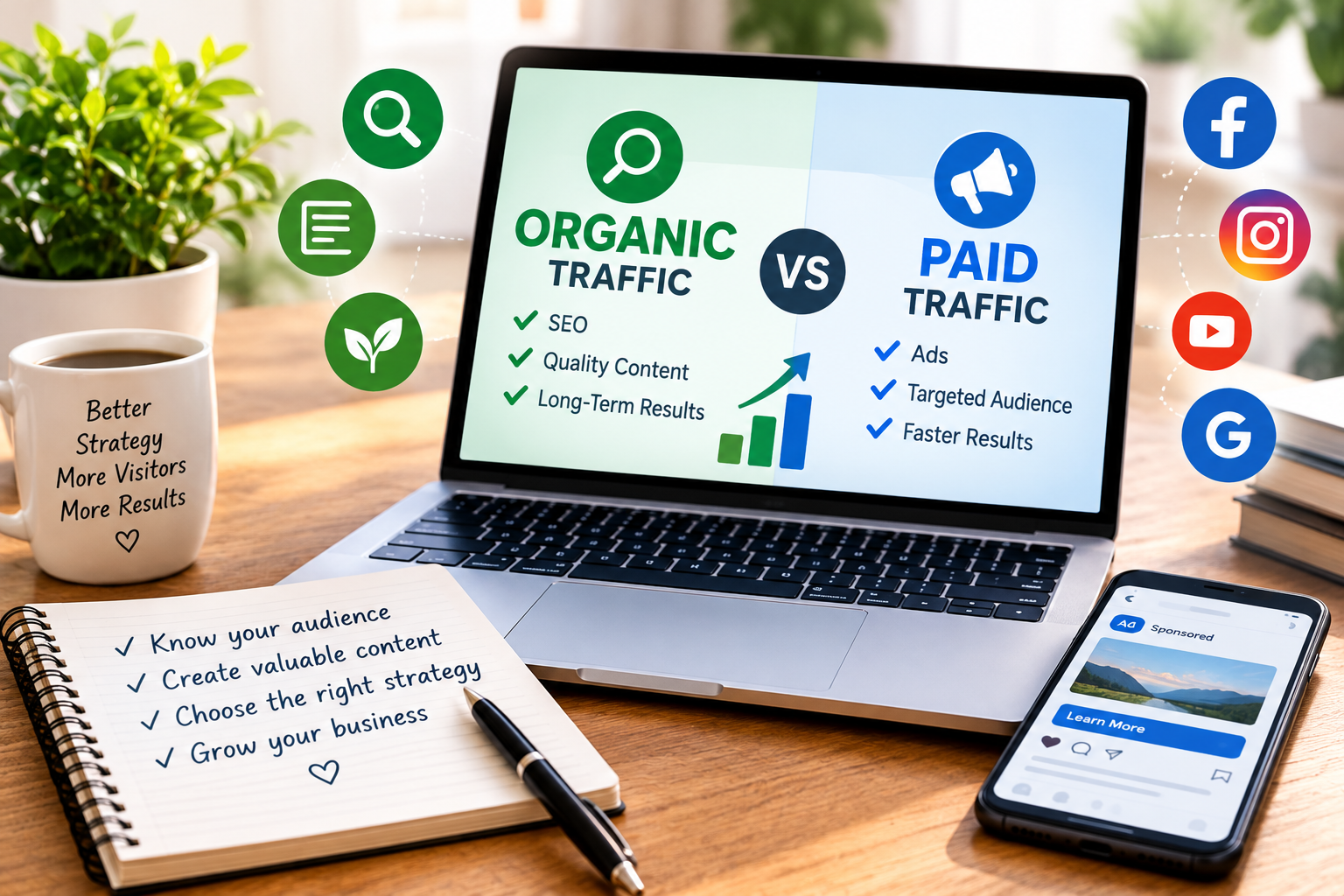
    Organic traffic refers to visitors who find your website naturally, without you paying directly for each visit.

    People can discover your content through search engines such as Google, social media, recommendations, or other websites that link to your pages.

    For example, someone may search for information about earning extra income online, find one of your articles in the search results, and visit your website. That visit is considered organic traffic.

    2. How Does Organic Traffic Work?

    Organic traffic usually takes time to build.

    You need to create useful content, optimize your pages for search engines, use relevant keywords, and provide information that genuinely helps your audience.

    Over time, your pages may begin appearing in search results and attracting visitors without requiring you to pay for every click.

    This is one reason why SEO (Search Engine Optimization) is so important for websites and blogs.

    3. Advantages of Organic Traffic

    Organic traffic has several advantages.

    First, you do not have to pay for every visitor who reaches your website through a search engine.

    Second, good content can continue attracting visitors for months or even years after it has been published.

    Organic traffic can also help build credibility because people are actively searching for information and choosing to visit your website.

    However, this strategy requires patience. A new website may take time to gain visibility and establish itself in search results.

    4. What Is Paid Traffic?

    Paid traffic is different because you pay to promote your content, product, service, or website.

    This can include advertising on platforms such as Google, Facebook, Instagram, YouTube, and other advertising networks.

    For example, you can create an advertisement for a product and pay a platform to show that advertisement to people who may be interested in it.

    When someone clicks on the advertisement and visits your website or sales page, that visit can be considered paid traffic.

    5. How Does Paid Traffic Work?

    Paid advertising allows you to reach an audience more quickly than organic strategies in many situations.

    You can often choose characteristics such as location, interests, age group, or other factors depending on the advertising platform.

    However, paid traffic requires careful planning.

    If you spend money on advertising without understanding your audience, creating an appropriate offer, or monitoring the results, you can spend money without getting the results you expected.

    6. Advantages of Paid Traffic

    One of the biggest advantages of paid traffic is speed.

    Instead of waiting for a page to gradually appear in search results, you can create an advertisement and start reaching potential visitors much faster.

    Paid advertising can also make it easier to test different audiences, messages, images, and offers.

    For businesses that already have a well-defined strategy, paid traffic can be a useful way to increase visibility and attract potential customers.

    7. Organic Traffic vs. Paid Traffic: Which One Is Better?

    There is no single answer to this question.

    The best option depends on your goals, available budget, experience, and the type of business you are building.

    Organic traffic can be a good choice if you want to build a long-term presence online and are willing to invest time in creating quality content.

    Paid traffic may be more appropriate if you want to reach a specific audience faster and have a budget available for advertising.

    In many cases, combining both strategies can be an effective approach.

    You can use organic content to build a long-term foundation while using paid advertising to reach new audiences and test different offers.

    8. Can Beginners Use Both Strategies?

    Yes. Beginners can learn to use both organic and paid traffic, but it is important to start gradually.

    If you are new to online marketing, it may be better to understand your audience and create useful content before spending a significant amount of money on advertising.

    Once you understand what your audience needs and which types of content perform well, you can consider investing in paid traffic more strategically.

    9. What About Affiliate Marketing?

    Traffic is especially important for affiliate marketing because affiliates need people to discover the products they recommend.

    You can use organic traffic by creating helpful articles, videos, social media content, or other resources that attract people who are interested in a specific topic.

    Paid traffic can also be used to promote offers, but you need to understand the advertising rules of the platform and the terms of the affiliate program before running ads.

    The goal should not simply be to get as many visitors as possible. The goal is to attract the right people.

    Conclusion

    Organic and paid traffic can both play an important role in building an online presence.

    Organic traffic usually requires more patience, but it can create a strong long-term foundation. Paid traffic can produce faster visibility, but it requires financial investment and careful monitoring.

    You do not necessarily have to choose only one.

    By understanding the differences between organic and paid traffic, you can make more informed decisions and develop a strategy that fits your goals, budget, and experience level.

    Before investing in paid advertising, it’s also important to learn how to identify scams and misleading income promises online.

    Please note: This e-book is currently available in Portuguese only. An English edition is not yet available.

    Disclaimer: This article is for educational purposes only. It does not guarantee income or specific results. Results depend on each person’s choices, effort, experience, and circumstances.

    About the Author

    Sidnea Nascimento is the creator of Renda Extra pelo Celular, a website dedicated to sharing practical information and ideas about earning extra income online. Her goal is to help readers discover digital opportunities and make informed decisions.

    Learn more about the author on the About Us page.

  • How to Start Earning Extra Income with Your Phone: A Complete Beginner’s Guide

    How to Start Earning Extra Income with Your Phone: A Complete Beginner’s Guide

    Looking for ways to earn extra income with your phone may help you supplement your budget, work more flexibly, or explore opportunities in the digital world. Getting started, however, takes care, organization, and a willingness to learn.

    You can use a phone to promote products, offer services, create content, and manage sales. But a phone is not a machine that automatically produces money. Results depend on the strategy you choose, the quality of your work, and your consistency.

    When I began researching ways to earn extra income with my phone, I also felt unsure because there were so many platforms, strategies, and different promises. Over time, I realized that the best approach is to learn one step at a time and avoid believing in quick or guaranteed results. I created this blog to share what I am learning as I build my own digital project and get to know this market, using simple language.

    In this article, you will learn about several possibilities and find a practical way to get started more safely.

    My first steps using only a phone

    When I decided to look for ways to earn extra income with my phone, I found many options and many promises of quick results. At first, it was difficult to know where to begin. I started researching each platform, learning its rules, and identifying the options that matched the time and resources I had available.

    I began with small tasks: creating accounts on platforms, organizing my login information, choosing a few channels to share content, and learning to test links before sharing them. Later, I was also able to prepare my own e-book, list the product on a platform, and build this blog mainly with my phone.

    That experience showed me that a phone can be enough to take the first steps, but it does not remove the need to learn and review your work. Keep your files organized, check information before publishing, and be patient with tasks that can take longer on a small screen.

    If you are wondering how much money you need to get started, read my related article about starting in the digital world with little investment.

    1. Is it really possible to earn extra income using a phone?

    Yes. Many digital activities can be done on a phone, from creating content to assisting customers and promoting products.

    That does not mean everyone will make money quickly. Some people may see early results in a short time, while others need longer to learn, develop skills, and reach an audience.

    Your first goal should not be to find a miracle promise. Choose a legitimate activity that fits your circumstances.

    Before you begin, ask yourself three questions:

    How much time can I dedicate each day?
    What kind of activity am I willing to learn?
    Do I want to sell products, offer services, or create content?

    Your answers can help you avoid starting several activities at once and abandoning all of them before you gain experience.

    2. Affiliate marketing

    In affiliate marketing, you promote products from other people or businesses using a referral link. When someone makes a qualifying purchase through that link, you may earn a commission.

    Products can be digital, such as courses and e-books, or physical, such as household items, electronics, clothing, and home goods.

    An affiliate’s work is more than sharing links. You need to explain the product, describe how it may be useful, and create content that helps people make an informed decision.

    Responsible promotion should:

    • Share accurate information;
    • Avoid exaggerated promises;
    • Clearly disclose when a link is an affiliate link;
    • Follow the platform’s rules;
    • Recommend products that are relevant to your audience; and
    • Avoid spam.

    Before promoting an offer, learn about the product, its sales page, its intended audience, the commission, and the affiliate program’s terms.

    3. Offering digital services

    Another option is to use a skill to provide services online. Even if you do not yet have professional experience, you can begin by learning one simple service and practicing before looking for clients.

    Examples include:

    • Creating graphics for social media;
    • Editing short videos;
    • Writing or proofreading text;
    • Creating captions;
    • Organizing business profiles;
    • Providing online customer support;
    • Typing and formatting documents; and
    • Adding products to online stores.

    To get started, choose just one service and create a few samples. These can be demonstration projects made specifically for your portfolio.

    You do not need to claim experience you do not have. It is better to be honest that you are a beginner, set a suitable price, and deliver careful work.

    4. Creating and selling digital products

    A digital product is something delivered online, such as an e-book, guide, workbook, spreadsheet, recorded lesson, or editable template.

    To create a useful product, identify a specific problem and offer an organized solution. A digital product does not have to be large, but it should deliver what its description promises.

    The process usually includes:

    1. Choosing a subject;
    2. Defining the audience;
    3. Organizing the content;
    4. Creating and reviewing the material;
    5. Listing the product on a platform;
    6. Preparing a product page; and
    7. Promoting it responsibly.

    The quality of the material and the trust you build matter more than promises of quick results.

    5. Creating content

    You can also build a project by creating content for Instagram, TikTok, YouTube, Facebook, Pinterest, or a blog.

    Monetization may come later through advertising, your own products, partnerships, or affiliate links. Creating content usually takes patience because an audience is built gradually.

    Choose a main subject and keep your content focused. A profile that covers many unrelated topics may have trouble attracting a clearly defined audience.

    Content formats you can create with a phone include:

    • Short videos;
    • Tutorials;
    • Tip lists;
    • Comparisons;
    • Answers to common questions;
    • Product reviews;
    • Educational articles; and
    • Lessons learned from experience.

    Focus on helping your audience. When content answers a real question, people may be

    6. Selling physical products

    You can also use a phone to promote physical products through online marketplaces, social media, and messaging channels.

    You may sell your own products, work as an affiliate, or use authorized referral programs. In every case, check the platform’s rules and make sure you have permission to use the images.

    Before publishing an offer, check:

    • Whether the description is accurate;
    • Whether the price is current;
    • Delivery terms;
    • The return or exchange policy;
    • The seller’s reputation;
    • Whether the link works; and
    • The promotion rules.

    Never copy someone else’s videos or photos without permission. Use your own materials or assets officially provided by the seller or affiliate program.

    7. How do you choose the best option?

    The best option is not necessarily the one that seems to pay the most. It is the one you can learn, practice, and keep doing consistently.

    If you enjoy explaining products, affiliate marketing may be an option. If you have a practical skill, you could offer a service. If you like teaching, you could create content or develop a digital product.

    Avoid starting five projects at once. Choose one path, give yourself time to learn, and track what is working.

    8. A step-by-step plan to get started

    Choose one activity

    Pick just one of the options above. Research how it works and learn the rules of any platforms involved.

    Define your audience

    Think about whom you want to help. Instead of trying to speak to everyone, choose a group and learn about its main questions.

    Organize your online presence

    Create a professional profile or a place to present your work. Use a clear name, a suitable profile photo, a concise description, and contact information.

    Prepare content before you sell

    Publish material that teaches, guides, or presents solutions. Avoid creating a profile made up only of advertisements and links.

    Promote responsibly

    Explain the product or service without guaranteeing results. Share accurate prices and terms, and clearly disclose affiliate links.

    Track your results

    Notice which content receives views, clicks, questions, and engagement. These signals can help you understand what interests your audience.

    Improve gradually

    Instead of spending a lot at the beginning, use free tools, practice, and invest only after you understand your activity better.

    9. A simple plan for your first seven days

    Day 1: Choose one way to earn extra income and research how it works.

    Day 2: Define your audience and write down five questions people in that group often ask.

    Day 3: Organize your profile, introduction, and contact channel.

    Day 4: Prepare two useful pieces of content related to your chosen subject.

    Day 5: Publish the first piece and observe the response.

    Day 6: Publish the second piece and talk with people who show interest.

    Day 7: Review what you learned and plan your next posts.

    This plan does not guarantee a sale in seven days. Its purpose is to help you move past indecision and begin with an organized routine.

    10. Common beginner mistakes

    Some mistakes can slow down a new project:

    • Believing promises of guaranteed money;
    • Buying several tools before learning the basics;
    • Switching activities every week;
    • Copying other people’s content;
    • Sharing links without explaining the products;
    • Expecting an immediate return;
    • Promoting products that do not fit the audience; and
    • Giving up before gaining experience.

    Starting small gives you room to learn with less risk. Over time, you can improve your content, understand your audience, and identify the activities that suit you best.

    11. How to avoid scams

    Be cautious of offers that:

    • Require an immediate payment to release a supposed job opportunity;
    • Promise large amounts of money without explaining the work;
    • Ask for your password, banking code, or account access;
    • Ask you to receive or transfer money for strangers;
    • Pressure you to decide quickly;
    • Guarantee profit with no effort; or
    • Do not provide a verifiable business, terms, or customer support channel.

    Before signing up or making a payment, research the business, read the terms, and check that the website address is genuine.

    12. Do I need to invest to get started?

    Not always. You can begin with free tools, especially for content creation, organic promotion, and learning new skills.

    Even without spending money, however, you will need to invest time, attention, and effort. Paid tools may help later, but they cannot replace knowledge, practice, or a sound strategy.

    13. How much can you earn?

    There is no guaranteed amount. Results vary according to the activity, your experience and effort, your audience, the quality of your work, and market conditions.

    Be cautious of anyone who presents a specific amount as if everyone will achieve the same result.

    Conclusion

    Looking for extra income with your phone can be the beginning of a new learning journey, but it is important to keep realistic expectations.

    Choose one activity, get to know your audience, create useful content, and learn from the results. You do not need to master everything before you begin, but you do need to act responsibly and keep improving.

    Not every opportunity you discover on your phone is trustworthy. Learning to recognize online scams and misleading offers can help you make safer choices.

    If you would like a more organized step-by-step guide, take a look at my e-book, “Extra Income Using Your Phone: A Practical Guide to Getting Started from Scratch,” by Sidnea Nascimento.

    It was created for beginners and covers digital income opportunities, affiliate marketing, choosing products, content creation, organic promotion, common mistakes, and a seven-day action plan.

    Please note: This e-book is currently available in Portuguese only. An English edition is not yet available.

    Disclaimer: This article is for educational purposes only. It does not guarantee income or specific results. Results depend on each person’s choices, effort, experience, and circumstances.

    About the author

    Sidnea Nascimento is the creator of Renda Extra pelo Celular, a project that shares simple, responsible content for people who want to learn about extra income and affiliate marketing.